About Conference
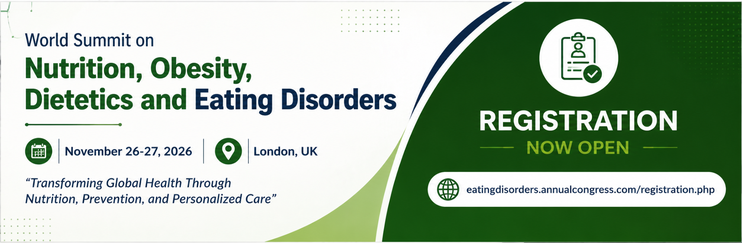
The World Summit on Nutrition, Obesity, Dietetics and Eating Disorders, taking place on November 26–27, 2026, in London, UK, will be held under the theme "Transforming Global Health Through Nutrition, Innovation, and Integrated Care." The summit will bring together leading researchers, clinicians, dietitians, nutritionists, healthcare professionals, academicians, and industry experts from around the world to exchange the latest scientific discoveries, innovative approaches, and evidence-based practices in nutrition, obesity prevention and management, clinical dietetics, and eating disorder care.
Sessions/Tracks
1. Eating Disorder
An eating disorder is a condition in which a person takes excessive food intake which affects a person's physical or mental health. It occurs in both men and women, young and old, rich and poor, and from all cultural backgrounds. The most common eating disorders include Anorexia Nervosa, Bulimia Nervosa, and Binge Eating Disorder. It can develop during in any stage in life but appears in teens and young adulthood. According to the survey conducted by the National Eating Disorder Association around the word 70 million people are prone to eating disorders. Since 1990's dietary problems have been progressively regular in Singapore.
-
Anorexia Nervosa
-
Adolescent eating and weight loss behavior
-
Bulimia Nervosa
-
Abnormal and maladaptive eating
-
Binge Eating Disorder
-
Food Addiction
Eating Disorder Conferences 2026| Nutrition Congress| Obesity Events | Diet Conferences | obesity Meeting 2026 | Nutrition Conferences
2. Eating Disorders Symptoms & Behaviors
Eating disorders symptoms and behaviors are complex. Many are caused by malnutrition. Some physical symptoms of eating disorders are weakness, feeling cold, reduced beard growth in men, Sleep problems, Dental problems, Muscle weakness Other possible manifestations are dry lips, burning feeling on toungue, parotid gland swelling. Though often associated with obesity it can occur in normal weight individuals also.
-
Amenorrhea
-
Reduction in waking erections
-
Ritualistic food behaviors
-
Low body weigh
-
Cognitive distortions
3. Biology & Pharmacology of Eating Disorder
Scientists are still researching possible biochemical or biological causes of eating disorders. In some individuals with eating disorders, certain chemicals in the brain that control hunger, appetite, and digestion have been found to be unbalanced. The exact meaning and implications of these imbalances remain under investigation. Eating disorders often run in families. Current research indicates that there are significant genetic contributions to eating disorders.
-
Antidepressants
-
BDNF - brain-derived neurotropic factor Cortisol
-
Genetic predisposition
-
Over-the Counter Drugs (OTC)
-
Selective Serotonin Reuptake Inhibitor (SSRI)
4. Nutrition Therapy In Eating Disorder
Medical Nutrition Therapy (MNT) is a holistic and therapeutic method for treating medical conditions and correlating symptoms. Medical Nutrition Therapy is established on the idea that several medical conditions progress or are made worse by an inadequate diet or insufficient nutrient intake. The components of MNT include; Intake assessment, Dietary modification, Patient education, Aftercare. Therapy also includes creating goals for the patient’s treatment and developing a focused nutrition prescription that entails patient education along with self-management training. Initial nutrition therapy assessment sessions may occur over a period of 60-75 minutes. Medical Nutrition Therapy for several diseases and conditions with the intent of improving overall health and quality of life. The goal of MNT in the eating disorder treatment is to stabilize complicated medical conditions, normalize food intake, establish healthier and normal eating behaviors, and promote the founding for an improved relationship with food.
-
Chronic/Severe dieting
-
Eliminating specific food items
-
Intake assessment
-
Dietary modification
-
Hunger and Fullness
-
Healthy exercise
-
Nutritional supplement assessment
5. Current Treatment and Approaches
Treatment for an eating disorder can rely upon the specifics of the disorder and can be tailored to every individual. Generally, the goals of eating disorder treatment are to restore the person to a healthy weight, treat any psychological issues associated with or coexisting with the disorder, and reduce in behavior or thoughts that contribute to the disorder. Alternative therapies may be helpful for a few individuals as an adjunct to psychological, nutritional and medical treatments. For example meditation will facilitate the reducing levels of anxiety or massage will facilitate to reconnect with our bodies. Every approach is totally different, but different therapies are typically involved with treating the person as a whole, as well as their mental and physical health.
-
Dialectical Behavior Therapy
-
Medical Nutrition Therapy
-
Equine Therapy
-
Acceptance and Commitment Therapy
-
Art Therapy
-
Dance Movement Therapy
-
Exposure and Response Prevention Therapy
6. Complications of Eating Disorders
Eating disorders cause a wide variety of complications, some of them life-threatening. The more severe or long lasting the eating disorder, the more likely you are to experience serious complications. Some of the underlying issues that are associated with an eating disorder include low self-esteem, depression, feelings of loss of control, feelings of worthless, identity concerns, family communication problems and an inability to cope with emotions. Patient suffering from anorexia nervosa will have a number of potential complications which include minor side effects such as fatigue or lack of energy as well as major ongoing health problems or even death. Whereas patient suffering from Bulimia nervosa often feel trapped in this cycle of deregulated eating, and there is a risk for major medical consequences associated with bulimic behaviors.
-
Reduce bone density
-
Constantly feeling cold
-
Muscle weakness
Market Analysis
The global burden of nutrition-related disorders, obesity, and eating disorders continues to rise, making them among the most significant public health challenges in 2026. According to the World Health Organization (WHO), overweight and obesity affect more than 2.5 billion adults worldwide, contributing substantially to the growing prevalence of cardiovascular diseases, type 2 diabetes, several cancers, and other chronic conditions. Europe remains one of the regions with the highest rates of overweight and obesity, with the United Kingdom continuing to report a high prevalence among both adults and children, emphasizing the urgent need for effective prevention and intervention strategies.
Eating disorders are also increasing at an alarming rate across all age groups and genders. Recent global estimates indicate that more than 70 million people are affected by conditions such as anorexia nervosa, bulimia nervosa, binge-eating disorder, and avoidant/restrictive food intake disorder (ARFID). Increased awareness has improved diagnosis, yet many individuals remain undiagnosed due to stigma, delayed recognition, and limited access to specialized care. The rising incidence of eating disorders among adolescents, young adults, and males further highlights the need for multidisciplinary research and clinical collaboration.
The global clinical nutrition and dietetics market is experiencing strong growth, driven by increasing demand for personalized nutrition, preventive healthcare, digital health technologies, and evidence-based dietary interventions. Governments, healthcare organizations, and research institutions are investing in nutrition programs and obesity management initiatives to reduce healthcare costs and improve population health outcomes. The integration of artificial intelligence, precision nutrition, nutrigenomics, and digital therapeutics is transforming the future of nutrition and dietetics.
Against this backdrop, the World Summit on Nutrition, Obesity, Dietetics and Eating Disorders 2026 provides a timely international platform for researchers, healthcare professionals, dietitians, nutritionists, policymakers, and industry leaders to exchange scientific knowledge, showcase innovative solutions, and develop collaborative strategies that address the evolving global challenges of nutrition, obesity, and eating disorders.
Past Conference Report
Eating Disorders 2025
The previous edition of the World Summit on Nutrition, Obesity, Dietetics and Eating Disorders concluded successfully, bringing together a distinguished gathering of researchers, clinicians, dietitians, nutritionists, healthcare professionals, academicians, policymakers, and industry representatives from across the globe. The conference served as an exceptional platform for exchanging scientific knowledge, presenting cutting-edge research, and discussing innovative approaches to improving global nutritional health.
Past Reports Gallery